
Characteristics Of Acetate Fabric
Feb 19, 2021
Acetate fiber is a natural substance extracted from wood pulp cellulose, which is the same chemical molecular component as cotton fiber, and acetic anhydride as raw materials. After a series of chemical processing, it can be used for spinning and weaving. Acetate filament fiber, which uses cellulose as the basic skeleton, has the basic characteristics of cellulose fiber; but its performance is different from regenerated cellulose fiber (viscose cupra silk), and has certain characteristics of synthetic fiber :
1. Good thermoplasticity: The acetate fiber softens at 200°C~230°C and melts at 260°C. This feature makes the acetate fiber thermoplastic similar to synthetic fibers. After plastic deformation, the shape does not recover, and it has permanent deformation. The acetic acid fabric has good formability, can beautify the body curve, and the overall is generous and elegant.
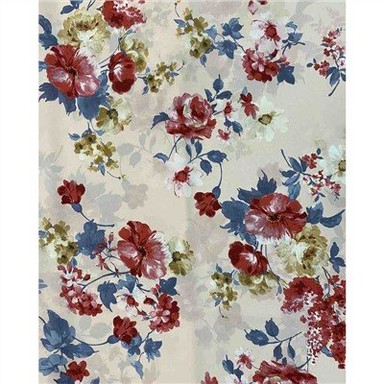
2. Excellent dyeability: Acetate fiber can usually be dyed with disperse dyes, and has good coloring performance, bright colors, and its coloring performance is better than other cellulose fibers. Acetate fabric has good thermoplasticity. Acetate fiber softens at 200°C ~ 230°C and melts at 260°C. It is similar to synthetic fiber. After plastic deformation, the shape does not recover and has permanent deformation.
3. Appearance resembles mulberry silk: The appearance of acetate fiber is similar in gloss to mulberry silk, soft and smooth in hand, and similar to mulberry silk, and its specific gravity is the same as that of mulberry silk, so the drape feel is the same as that of mulberry silk. The woven fabric made of acetate silk is easy to wash and dry, and is not mildew and worm-eaten. The elasticity is better than that of viscose fiber.
4. The performance is close to that of mulberry silk: Compared with the physical and mechanical properties of viscose fiber and mulberry silk, acetate fiber has lower strength and greater elongation at break. Although the ratio of wet strength to dry strength is lower, it is higher than that of viscose fiber. , The initial modulus is small, the moisture regain is lower than that of viscose fiber and mulberry silk, but higher than that of synthetic fiber. Its wet strength to dry strength ratio, relative hook strength and knot strength, elastic recovery rate, etc. are not different from that of mulberry silk. Big. Therefore, the performance of acetate fiber is closest to that of mulberry silk among chemical fibers.
5. Acetic acid fabric is not charged; it is not easy to absorb dust in the air; dry cleaning, water washing and machine hand washing below 40 ℃ can be used, which overcomes the weakness of silk and wool fabrics that carry bacteria; it is dusty and can only be dry-cleaned, and it is also free of insects. The shortcomings are easy to manage and store, and the acetate fabric has the resilience and smooth feel of woolen fabrics.
Others: Acetic acid fabric has and surpasses the many properties of cotton and linen fabrics, such as moisture absorption and breathability, non-sweat, easy to wash and dry, no mildew and no moth, comfortable to skin, and absolutely environmentally friendly.